

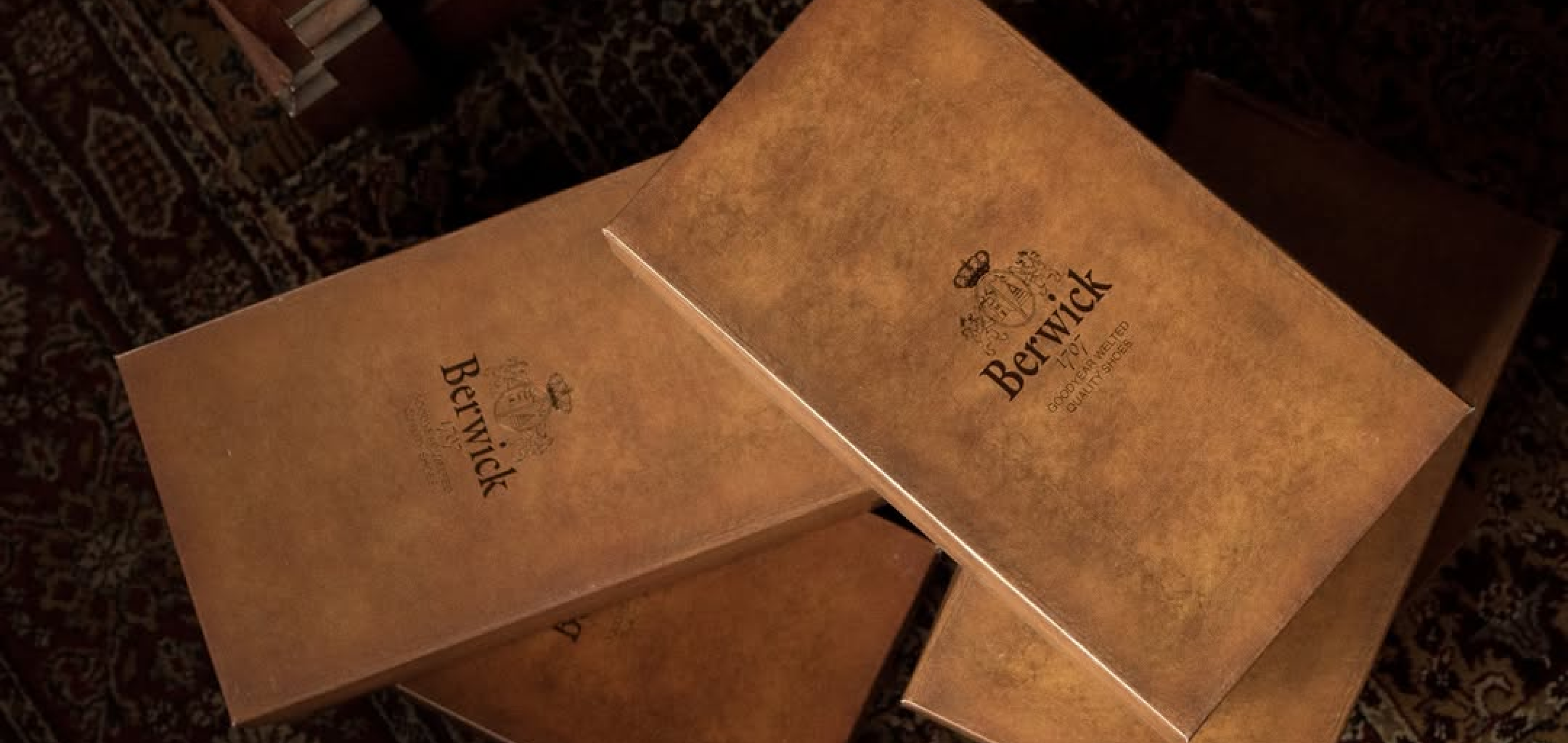
BERWICK 1707

History of Berwick 1707
On April 25, 1707, Bourbon troops led by the Duke of Berwick defeated the Austracist forces in a battle that would open the gates to the Kingdom of Valencia—an area of vital importance to Bourbon interests—and ultimately lead to the proclamation of Philip V as King of Spain.

During the final third of the last century, our footwear manufacturing company decided to invest in the development of a product offering high quality, comfort, and durability—qualities inherent to Goodyear Welt construction—thereby giving rise to our Berwick 1707 brand.

Excellence at every step
Thanks to the combination of technology and artisanal expertise in highly specialized tasks—requiring knowledge gained over many years of experience—Berwick 1707 and Berwick 1707 Premium Grade shoes are meticulously crafted products that will meet the expectations of the most discerning wearer and faithfully accompany them, step by step, over the years.

It is worth highlighting that all components of our footwear are manufactured entirely at our facilities using raw materials that meet European Union standards for quality and environmental responsibility. Virtually all the raw materials we use are of European origin.

Goodyear Welt: From Craftsmanship to Industry
Goodyear Welt manufacturing began on January 24, 1871, when Charles Goodyear Jr. patented a machine for stitching leather—a task that, until then, had been performed by hand.
In 1883, Jan Ernst Matzeliger patented the automatic stitching machine.

Subsequently, Sydney W. Winslow purchased these patents and founded the United Shoe Machinery Company; its machines are still in use today and helped develop the industrial manufacturing process, exponentially increasing production, creating thousands of jobs, and reducing the price of shoes by 50%.
Goodyear Welt: From Craftsmanship to Industry
Currently, the Berwick 1707 model is manufactured in Almansa using the process patented by Charles Goodyear Jr. some 150 years ago, with production vertically integrated through a complex industrial organization; consequently, every single stage of shoe manufacturing—even those typically outsourced, such as heel construction or sole production—is carried out within the same factory, thereby facilitating cost containment and quality control.