

craft
manufacturing process
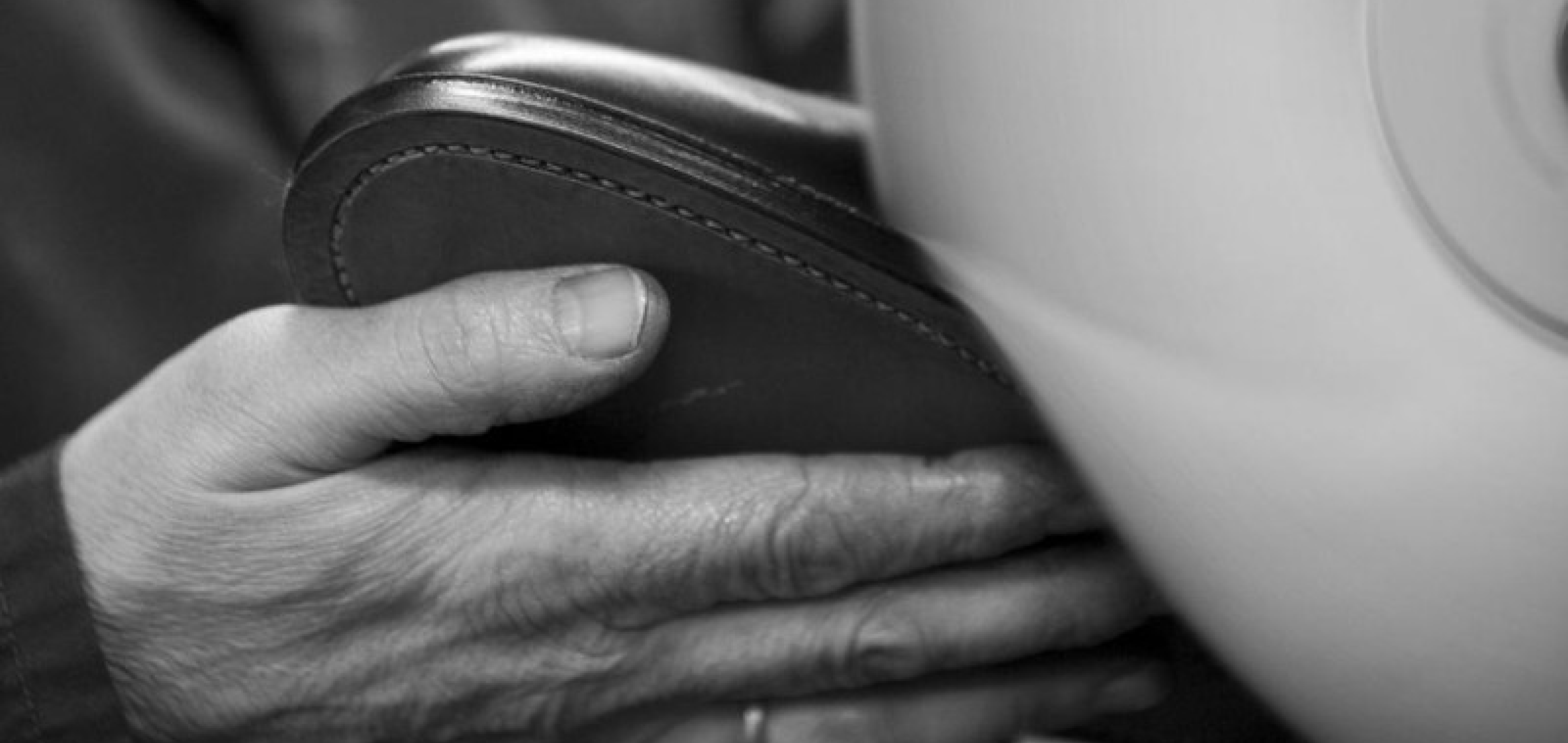
The Goodyear Welt process is a shoemaking method that can be performed either by machine or by hand. In 1874, Charles Goodyear devised a machine that mechanized this process, making it far easier and more productive. However, even today, operating this machine requires a certain level of skill from the operator. It is one of the oldest, most durable, and most elaborate methods. It involves stitching the welt to the leather upper assembly and the insole, and then stitching the other part of the welt to the outsole. Between the insole and the outsole, a steel bar or other rigid component known as a shank is inserted to reinforce the sole, along with a natural cork filler that molds to the shape of the foot; in addition to making the shoe more comfortable, this filler acts as a natural insulator against ground moisture.

Selection of the best leathers and soles.
Berwick 1707 uses a selection of the finest leathers on the market, depending on the required finish. Our leathers come from the best tanneries in France, England, Italy, Spain, and the United States.

Leather cutting
The various leather pieces that make up a model can be cut manually—requiring a high degree of precision from the operator—using a die to apply pressure to a sharpened iron blade, or by means of automatic machines that incorporate new computer technologies to streamline and accelerate the process.

Shoe manufacturing
All the leather pieces needed to make the shoe are sewn together to form the so-called "upper"—that is, the assembly of all the leather parts ready for the shoe to be put together.
Manufacturing
Goodyear welt shoe manufacturing involves over 200 manual operations. Once the shoe parts—including the lining—have been cut, assembled, and stitched, the shoe is mounted onto a last. It is fitted with an insole featuring a projecting rib—which may be made of leather or a highly durable fabric known as a "gemming" strip—to which a strip of leather (the welt), approximately 1.5–2 cm wide, is stitched.
This insole creates a cavity within the rib that is filled with a mixture of natural cork and a binding agent to provide comfort and insulation from the ground. A hardened plastic piece known as a shank—approximately 8–10 cm long—is positioned along the underside, extending from the middle of the heel toward the toe, to reinforce the shoe's structure.
)
)